aviation-courses-after-plus-two
Understanding Aviation Courses After Plus Two
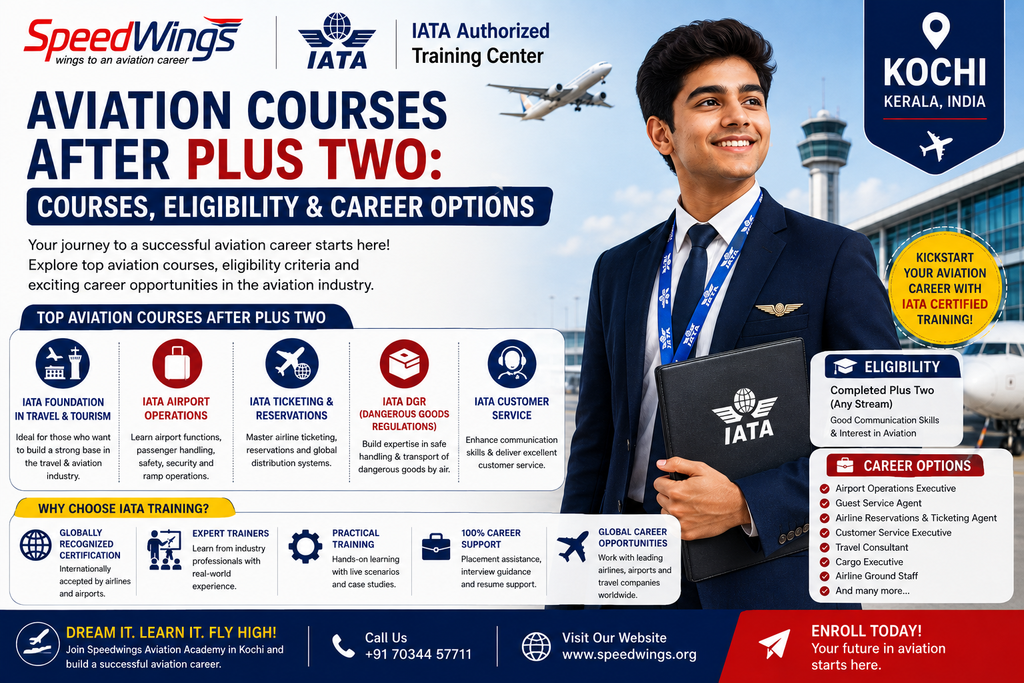
Aviation Courses After Plus Two: Courses, Eligibility & Career Options is an important topic for students planning their next step after Plus Two. The aviation sector includes a wide range of roles beyond flying, including airport operations, passenger services, airline support, administration and customer service. Students searching for aviation courses after Plus Two should first understand what each programme teaches, who can apply, and which career direction it supports. Choosing a course based only on a course name can lead to confusion. A better approach is to match the programme with your interests, academic background and preferred type of work. Students who enjoy communication and customer interaction may prefer passenger-facing roles, while those interested in coordination and administration may prefer operations or management.
Why Aviation Is a Popular Career Choice
Airports bring together many teams that work around passengers, aircraft movements, facilities, security procedures, baggage, airline services and administration. This creates different career pathways. Aviation education can help students become familiar with industry terminology, workplace expectations and operational concepts before they enter the job market. It can also help learners develop transferable skills such as communication, teamwork, time management and problem solving.
Course Options to Consider
Depending on the institution, students may find programmes related to aviation courses after 12th, aviation management after Plus Two, airport courses after 12th and other aviation services. Some are diploma-level programmes while others are degree programmes. The right choice depends on whether the student wants a shorter career-focused qualification or a broader academic programme.
Eligibility After Plus Two
Eligibility differs from one programme and institution to another. Many entry-level aviation and airport-related programmes consider Plus Two or an equivalent qualification. Some degree programmes may have additional academic requirements. Students should always check the current admission criteria directly with the institution before applying.
Skills Students Should Develop
Aviation is a service- and operations-oriented industry, so technical knowledge is only one part of career preparation. Communication, professional etiquette, teamwork, basic computer skills, customer handling and attention to detail can be useful. English communication can also be important in many aviation environments because employees may interact with passengers from different backgrounds.
Practical Training and Industry Exposure
Students should look beyond the course title and ask whether the programme provides practical learning. Classroom theory can explain airport processes, but practical activities can make those concepts easier to understand. Where available, internships, simulations, role plays, airport visits or industry interaction can help learners connect academic topics with real workplace situations.
Career Opportunities
Career opportunities depend on the qualification, employer, experience and role requirements. Graduates may explore airport operations, passenger service, ground handling, airline support, customer service, travel-related services and administration. Students should avoid choosing a course based on guaranteed-job claims and instead evaluate the training, skills and support offered by the institution.
How to Choose the Right Institution
Before enrolling, compare the syllabus, course duration, eligibility, practical exposure, faculty, facilities, fees and career support. Ask what the programme covers and which roles it is intended to prepare students for. It is also useful to understand whether the institution provides placement assistance and what that assistance actually includes.
Is Aviation a Good Choice After Plus Two?
For students genuinely interested in airports, airlines, travel and customer-facing operations, aviation can be a worthwhile career area to investigate. It offers multiple pathways rather than a single job. The most suitable programme is one that matches the learner’s strengths and provides relevant knowledge and practical exposure.
Final Thoughts
Choosing aviation courses after Plus Two should be an informed decision. Students should compare programmes carefully, understand eligibility and identify the type of aviation career they want to pursue. With appropriate education, practical exposure and strong communication skills, Plus Two graduates can build a foundation for careers across aviation and airport-related services.
Frequently Asked Questions
What are aviation courses after Plus Two?
It is a study or career pathway related to aviation, airport services or management, depending on the programme.
Can I join after Plus Two?
Many relevant programmes accept Plus Two graduates, but exact eligibility should be checked with the institution.
Is aviation only for pilots?
No. Aviation also includes airport operations, passenger services, airline administration, ground services and customer support.
Is practical training important?
Yes. Practical exposure can help students understand procedures and workplace expectations.
What skills are useful?
Communication, teamwork, organisation, customer service, computer skills and attention to detail are valuable.
How should I choose a course?
Compare syllabus, eligibility, duration, practical exposure, fees and career support before enrolling.
Can an aviation course lead to airport jobs?
Relevant qualifications can prepare students for aviation-related roles, although employment depends on employer requirements and individual skills.
Should I choose a diploma or degree?
The choice depends on your education plans, preferred career pathway, time and budget.
What Students Should Ask Before Enrolling
Students should ask about the detailed curriculum, teaching method, practical activities, assessment pattern, attendance requirements and career guidance. It is also sensible to understand the difference between academic learning and job-specific training. A transparent institution should be able to explain the programme clearly without making unrealistic employment promises. Comparing two or three programmes can make the decision easier.
Building a Strong Profile Alongside the Course
Students can strengthen their profile by improving spoken English, professional communication, computer literacy and general awareness of aviation. Reading about airport processes and practising customer-service situations can also be useful. Participation in presentations, group activities and industry-oriented projects can help build confidence. These skills are valuable because many airport and airline roles involve communication and coordination.
Conclusion
An aviation career can begin through several educational routes after Plus Two. The key is to choose a course that fits the student’s interests and provides useful knowledge, practical exposure and realistic career preparation. By researching carefully and developing strong professional skills, students can make a more confident start in the aviation industry.
